India’s expanding aerospace capability has produced increasingly indigenous aircraft. Continued dependence on foreign jet engines reveals the distance between manufacturing a platform and controlling the capability beneath it.
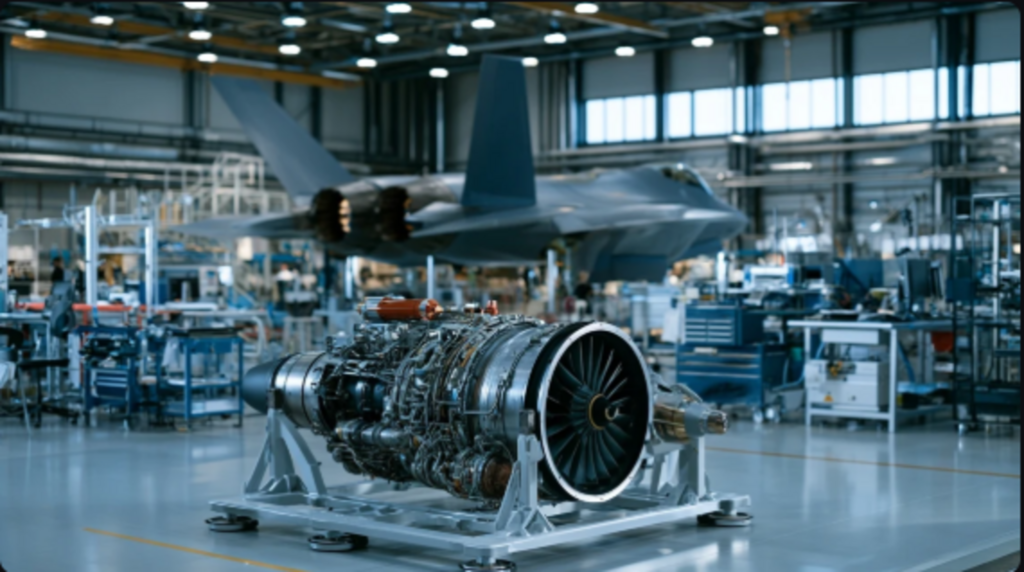
Figure 1. India has demonstrated that it can design and build increasingly sophisticated combat aircraft. The deeper strategic question is whether it can acquire control over the propulsion capability that powers them
India’s defence-manufacturing expansion is increasingly visible. The country now produces combat aircraft, helicopters, missiles, warships, radars and a growing range of sophisticated subsystems. Yet industrial progress does not eliminate dependence in a single movement. It reveals its deeper layers.
An Indigenous Aircraft Can Still Contain Strategic Dependence
India may design an aircraft’s airframe, flight-control system and weapons integration, manufacture much of its structure and assemble the final platform domestically. But if the aircraft depends on a foreign engine, one of its most consequential capabilities remains externally controlled.
The issue is not the mere presence of foreign components. Modern aircraft are international products, and complete autarky would be economically irrational. The problem arises when dependence is concentrated in a technology that is essential, difficult to substitute and vulnerable to external production schedules, export permissions or political decisions. Replacing an engine can alter weight, airflow, thermal behaviour, structural loads and flight characteristics, forcing extensive redesign and certification.
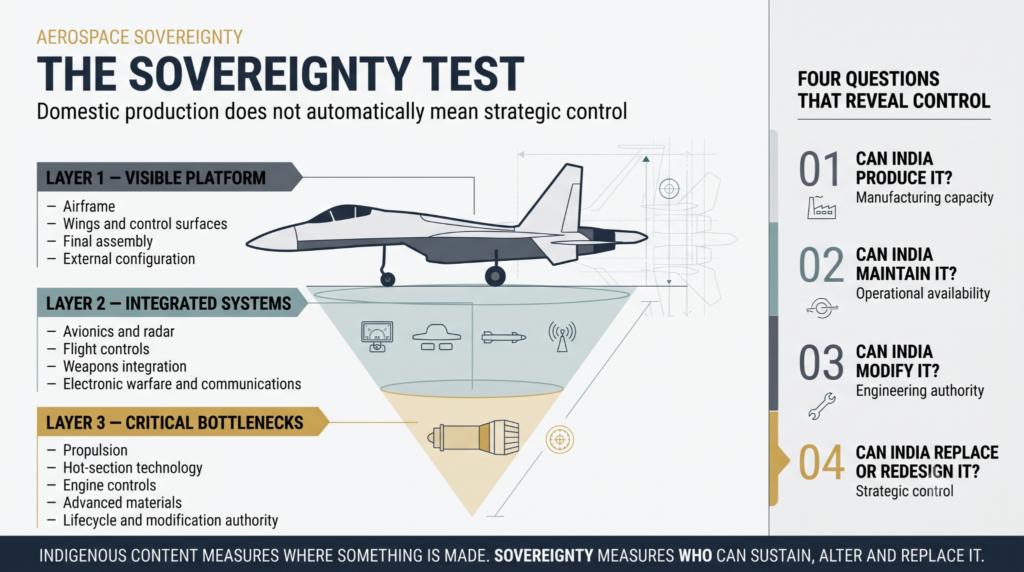
Figure 2. A platform can contain substantial domestic value while remaining dependent at a critical technological bottleneck.
Aerospace sovereignty is therefore not a localisation percentage. It is the ability to produce, sustain, modify and eventually replace the systems that determine whether a platform can evolve independently
What the C919 Reveals
China’s COMAC C919 is a major industrial achievement. Developing a modern passenger aircraft requires sophisticated programme leadership, systems integration, testing, certification and supply-chain coordination. China has demonstrated the ability to organise those capabilities around a domestically led commercial-aircraft programme.
Yet the C919 is powered by the LEAP-1C engine produced by CFM International, the GE Aerospace–Safran joint venture. This does not make the aircraft “foreign,” nor does it erase China’s achievement. It demonstrates that platform capability and propulsion capability can mature at different speeds. A country may control the aircraft programme before it controls the hardest technology inside it.
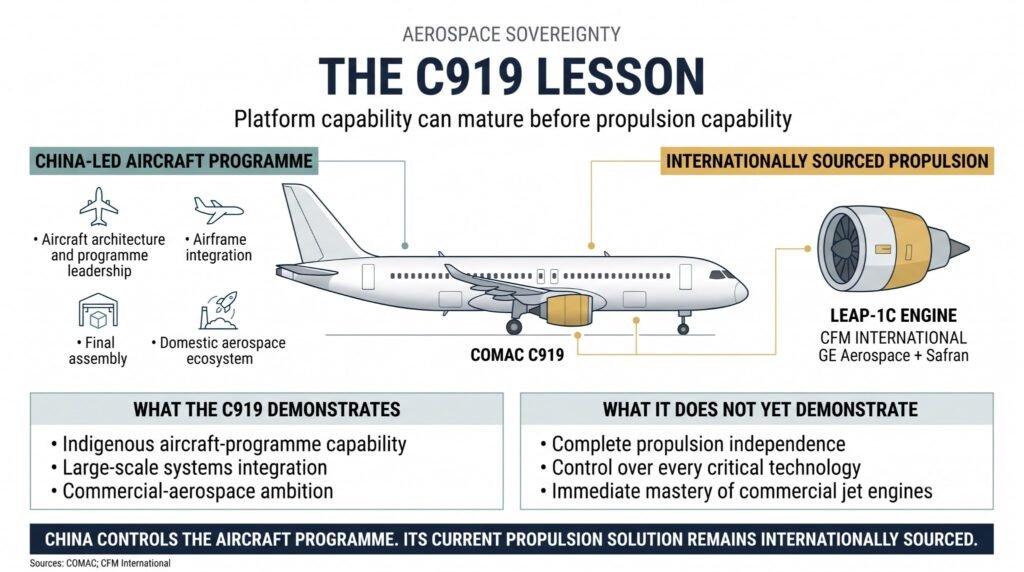
Figure 3. The C919 demonstrates that platform capability can mature before propulsion capability. Its achievement and its dependency can both be true.
For India, the comparison exposes the limits of localisation statistics. A high share of domestic production does not guarantee freedom of action if the least substitutable component remains externally controlled.
Why Jet Engines Remain So Difficult
A fighter engine must generate enormous thrust while remaining compact, light and reliable. Its compressor must operate across rapid changes in speed and altitude. Its combustor must remain stable. Turbine components must survive extreme temperature, rotational stress and repeated thermal cycling while maintaining microscopic tolerances.
The hottest components may encounter gas temperatures beyond the melting point of their underlying materials. Their survival depends on advanced alloys, internal cooling passages, thermal-barrier coatings and tightly controlled manufacturing. Raising performance in one area can shorten component life or increase demands elsewhere. A successful test run is only the beginning; the real objective is an engine that can be manufactured repeatedly, maintained affordably and trusted across thousands of operating cycles.
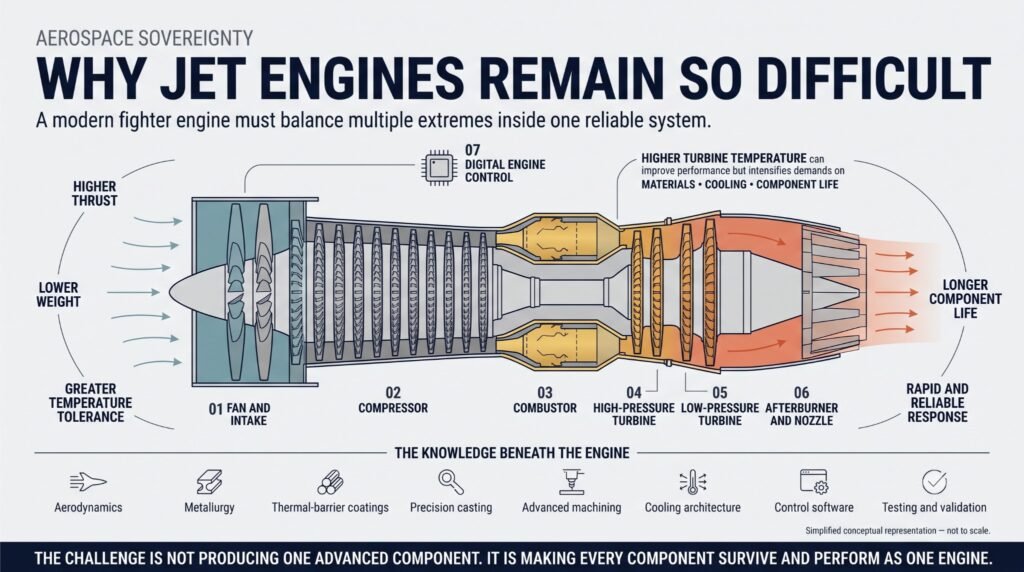
Figure 4. A fighter engine combines extreme heat, pressure, rotational stress and precision inside a system that must remain reliable under rapidly changing operating conditions.
Kaveri, Tejas and the Value of an Incomplete Programme
India attempted to cross this boundary through the Kaveri programme. It did not deliver an engine with the required combination of thrust, weight and operational performance for the Tejas. That outcome cannot be softened: Kaveri did not fulfil its original mission.
But the programme should not be reduced to a binary verdict. It forced Indian institutions to confront combustion, compressor design, turbine technology, materials, controls, testing and systems integration at a depth that imported engines alone could not provide. The useful question is not whether Kaveri was a success or failure in the abstract, but what capability India retained because it attempted the programme—and what it still lacks despite that effort.
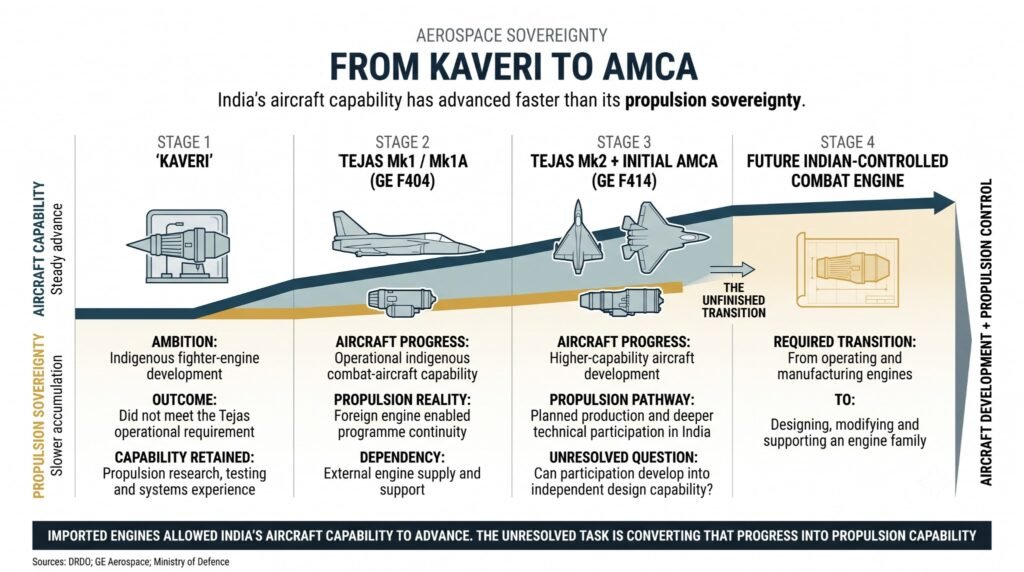
Figure 5. Kaveri, the F404, the F414 and a future Indian-controlled engine should be read as stages in one long capability journey—not as unrelated procurement decisions.
The GE F404 allowed Tejas development to continue while propulsion capability lagged. That was pragmatic: waiting for an indigenous engine could have delayed the entire aircraft ecosystem. But the more successfully India expands Tejas production, the more visible the propulsion bottleneck becomes.
AMCA Raises the Stakes
The Advanced Medium Combat Aircraft carries the question into a more consequential generation. Initial aircraft are expected to use twin GE F414 engines, allowing India to advance stealth shaping, avionics, weapons integration and flight testing without waiting for a new powerplant. The government’s execution model also opens prototype development to Indian public companies, private firms and consortia, potentially widening the aerospace ecosystem.
Using a proven foreign engine initially is strategically defensible. Allowing that interim solution to become the permanent architecture of dependence is the greater risk. A combat aircraft expected to evolve for decades will require changes in thrust, electrical power, thermal management, signatures and lifecycle support. If India lacks sufficient propulsion authority, major evolution may continue to require the foreign designer.
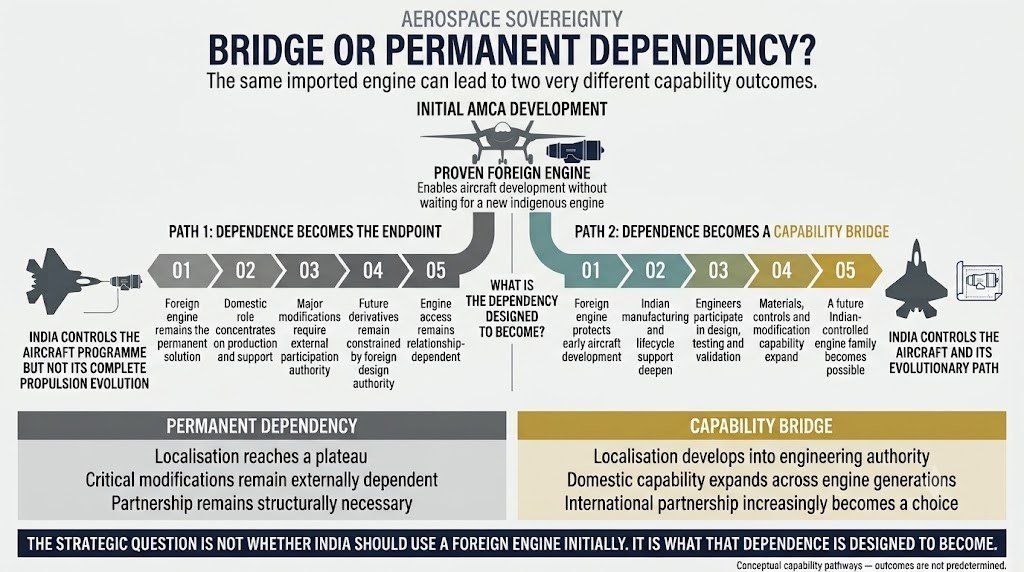
Figure 6. The same imported engine can either protect near-term aircraft development or perpetuate long-term dependence. The difference lies in the capability pathway built around it.
Sovereignty Does Not Require Isolation
India does not need to reject foreign engines, investment or collaboration. Even established aerospace powers distribute work across international suppliers. The objective is freedom of action: enough control to sustain the aircraft, modify propulsion, expand production and develop future variants without facing a permanent external veto.

Figure 7. The aircraft is the visible product. Beneath it lies the deeper capability system—materials, manufacturing, testing, software and engineering knowledge—that determines whether aerospace progress can be sustained independently.
India can now build the aircraft. Its next aerospace test is whether it can control what keeps that aircraft flying.
The engine is not the only measure of aerospace sovereignty, but it may be the most revealing. India must decide which capabilities it can safely source, which it can acquire through partnership and which it must ultimately control. That decision will determine whether AMCA becomes merely India’s most sophisticated indigenous aircraft—or the programme through which the country begins mastering the deepest technological constraint in its aerospace ambitions.
Selected Sources
COMAC — LEAP-1C engine for the C919: https://samc.comac.cc/xwzx/sfyxw/201511/11/t20151111_3083457.shtml
GE Aerospace — HAL partnership and F414 role: https://www.geaerospace.com/news/articles/ge-aerospace-and-hal-celebrate-40-years-partnership
Ministry of Defence — AMCA execution model: https://www.pib.gov.in/PressReleasePage.aspx?PRID=2210154
DRDO — engine and propulsion systems overview: https://drdo.gov.in/drdo/sites/default/files/publication-document/NL_Mar2023.pdf
Editorial disclaimer: This article is an analytical interpretation based on publicly available information. It does not represent the position of any government, armed service, manufacturer or programme partner.